
Planning
Accessible Alaska Cruising
Alaska is one of the more accessible cruise destinations, because so much of the best content is scenic cruising viewed from the ship. The complications are specific and predictable: some ports tender rather than dock, terrain ashore is uneven, and several signature excursions involve small boats or aircraft with real physical requirements.
The short answer
Book an accessible cabin directly with the cruise line rather than as a guarantee, confirm which ports tender, and check step free access on every excursion before booking. Icy Strait Point and Ketchikan are the most accessible ports; Sitka is the most difficult because it often tenders. The White Pass railway and Mendenhall shuttle are the best low demand excursions.
Key points
- Book accessible cabins directly and never as a guarantee rate.
- Tender ports cannot always accommodate wheelchairs, and this varies with sea conditions on the day.
- Icy Strait Point is the most accessible port thanks to its gondolas and level site.
- The White Pass railway has accessible carriages and is the best excursion for most travellers.
- Much of the finest content is scenic cruising from the ship, requiring no shore access at all.
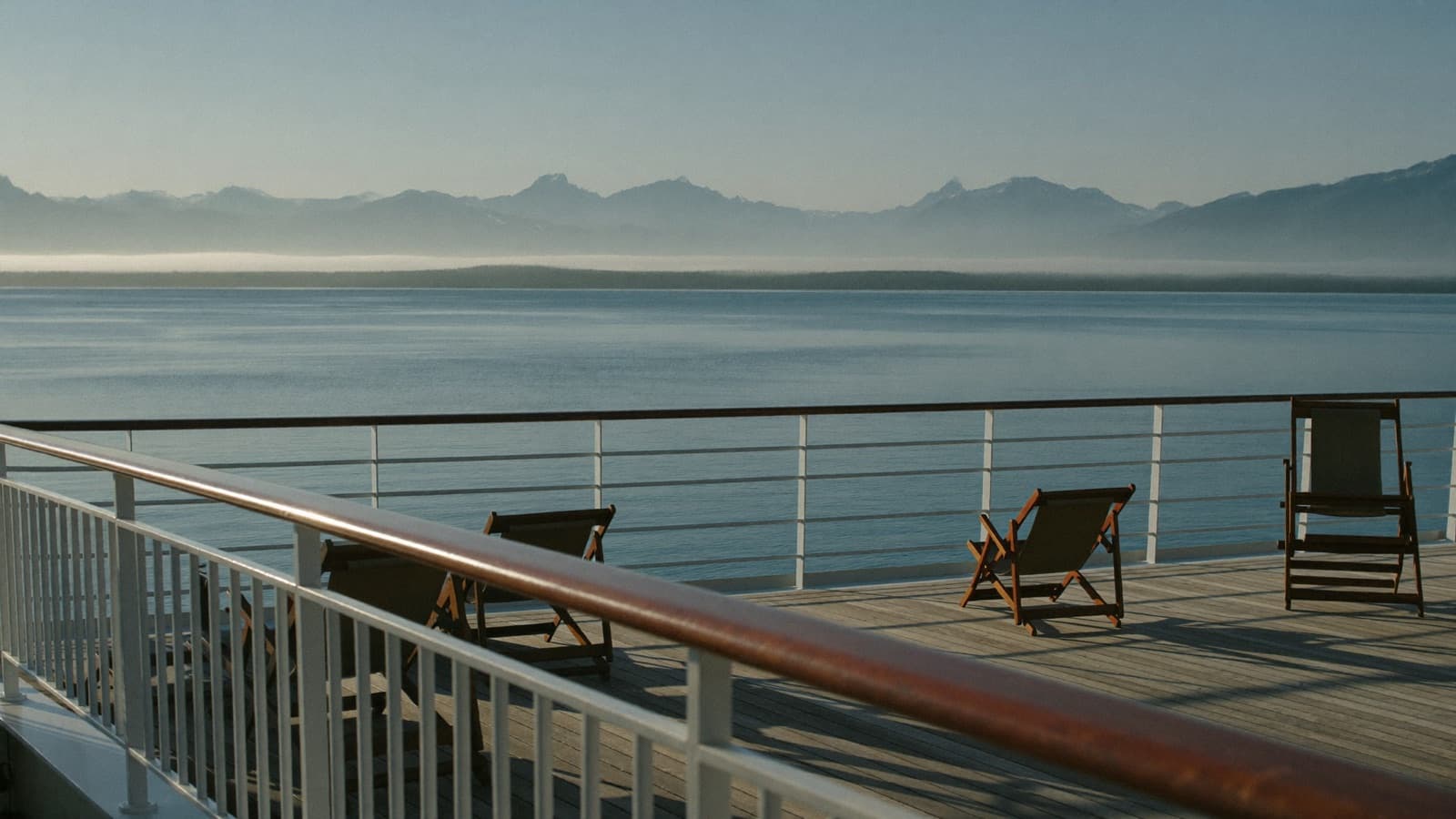
Alaska has a structural advantage for travellers with mobility needs: the headline experiences of the itinerary, Glacier Bay, Hubbard Glacier, the fjords and College Fjord, all happen from the ship. There is no equivalent of a beach day you cannot reach.
The planning work is in the details, and they are knowable in advance.
Accessible cabins
- Book directly with the cruise line accessibility team. They can confirm the specific features of a specific cabin, which a general booking agent often cannot.
- Never book an accessible cabin as a guarantee. Guarantee bookings assign a cabin later, and there is no assurance it will be the one you need.
- Confirm door widths, turning space and roll in shower. Not every cabin marked accessible has a roll in shower, and some have a shower with a lip.
- Ask about the balcony threshold. Many accessible balcony cabins have a raised threshold that a wheelchair cannot cross. Some ships offer ramps.
- Request a mid ship cabin near a lift. Distances on a large ship are substantial.
- Accessible cabins are limited and sell out first, often twelve months or more before sailing.
Port by port accessibility
| Port | Docks or tenders | Terrain | Assessment |
|---|---|---|---|
| Icy Strait Point | Docks | Gentle, gondolas | Best. Level site with gondolas removing the climbs |
| Ketchikan | Docks | Flat, some boardwalk | Very good. Town centre a few minutes from the berth |
| Skagway | Docks | Flat | Very good. Accessible shuttles from the far berths |
| Juneau | Docks | Flat downtown | Good downtown. Mendenhall needs an accessible shuttle, and the viewing area is paved |
| Victoria | Docks | Flat | Good, but the walk to town is 25 to 30 minutes. Use the shuttle |
| Sitka | Often tenders | Flat in town | Most difficult. Tender access depends on sea conditions |
Excursions with step free or low demand access
| Excursion | Port | Access notes |
|---|---|---|
| White Pass railway | Skagway | Accessible carriages available. Advance notice required |
| Mendenhall Glacier shuttle | Juneau | Accessible shuttles available. Paved viewing area and visitor centre |
| Mount Roberts Tramway | Juneau | Level access at both ends. From the dock |
| Whale watching, larger vessel | Juneau or Icy Strait Point | Some operators have level boarding ramps. Confirm before booking |
| Totem Bight State Park | Ketchikan | Level gravel paths, generally manageable |
| Icy Strait Point gondolas | Icy Strait Point | Step free access to the upper site |
| Butchart Gardens | Victoria | Level paths and wheelchairs available on site |
- Ask specific questions. Not "is it accessible" but "is there a step to board, how wide is the door, is there a lift, how far is the walk from the coach".
- Book through the cruise line for accessible excursions. Ship booked tours have documented accessibility ratings and the line has responsibility if the arrangement fails.
- Helicopter and floatplane tours have real limits. Boarding involves steps and confined space, and weight limits apply per passenger.
- Allow more time. Accessible boarding usually happens first or last, which changes the shape of the day.
Equipment, hire and onboard practicalities
- Mobility equipment hire can be delivered to the ship in Seattle and Vancouver by specialist companies, and collected at the end. Arrange this weeks in advance.
- Scooters must fit in the cabin. Corridors cannot be used for storage under safety rules, so the scooter has to fit through the door and park inside.
- Oxygen and medical equipment require advance notification and sometimes a physician's letter. Rules vary by line.
- Accessible tender boats exist on some ships but not all, and use depends on sea state.
- Ships have accessible public toilets, lifts and cabins, but older ships have narrower corridors and more thresholds than newer ones.
- Ask about muster station access. The safety drill location should be confirmed as reachable at booking.
Choosing the right ship and itinerary
- Newer ships are generally more accessible. Wider corridors, more lifts, better cabin design and fewer thresholds.
- Consider a round trip rather than a one way. It halves the airport transfers and removes the long land transfer from Whittier or Seward.
- Choose an itinerary with more scenic cruising. A Gulf of Alaska sailing with Hubbard and College Fjord delivers more content from the ship than a port heavy Inside Passage route.
- Larger ships have more accessible cabins but longer internal distances. Mid size ships are often the better balance.
- Check whether your itinerary tenders anywhere. An itinerary that docks at every port removes the single biggest uncertainty.
Frequently asked questions
Are Alaska cruises accessible for wheelchair users?
Can wheelchair users go ashore at tender ports?
How do I book an accessible cruise cabin?
Which Alaska excursions are wheelchair accessible?
Can I bring a mobility scooter on an Alaska cruise?
Which Alaska cruise port is most accessible?
Keep researching
Pacing, mobility and health planning.
The most accessible port on the circuit.
How tendering affects the port day.
Medical cover and evacuation in Alaska.