
Alaska Cruises
Alaska Cruise Guide for First Timers
This guide assumes you have never cruised Alaska and takes you from the first decision to the final port day. Alaska is different from other cruise destinations in ways that are not obvious until you are there: the weather is a planning input rather than a background condition, the ports are tiny, and the best days are often the ones where you never leave the ship.
The short answer
For a first Alaska cruise, book a seven night sailing in June or early July that includes Glacier Bay, choose an oceanview or balcony cabin mid ship, book one significant excursion in each port at least three months ahead, arrive at your departure city a day early, and pack a layering system rather than a heavy coat. Plan on seven nights minimum, a balcony if the budget allows, and one signature excursion per port rather than four rushed ones. First timers consistently rate Glacier Bay, whale watching from Juneau and the White Pass railway from Skagway as the highlights that justify the trip.
Key points
- Book a seven night itinerary that includes Glacier Bay for a first visit.
- Arrive a day early. Flying in on embarkation day is the most costly mistake available.
- Book one significant excursion per port, three or more months ahead.
- Pack layers, not bulk, and treat the waterproof shell as non negotiable.
- The scenic cruising days are as important as the ports. Plan to be on deck.
Most cruise advice assumes you already know how cruising works. This guide does not. It walks through a first Alaska cruise in the order the decisions arise, and it flags the places where Alaska differs from what you might expect from a Caribbean or Mediterranean sailing.
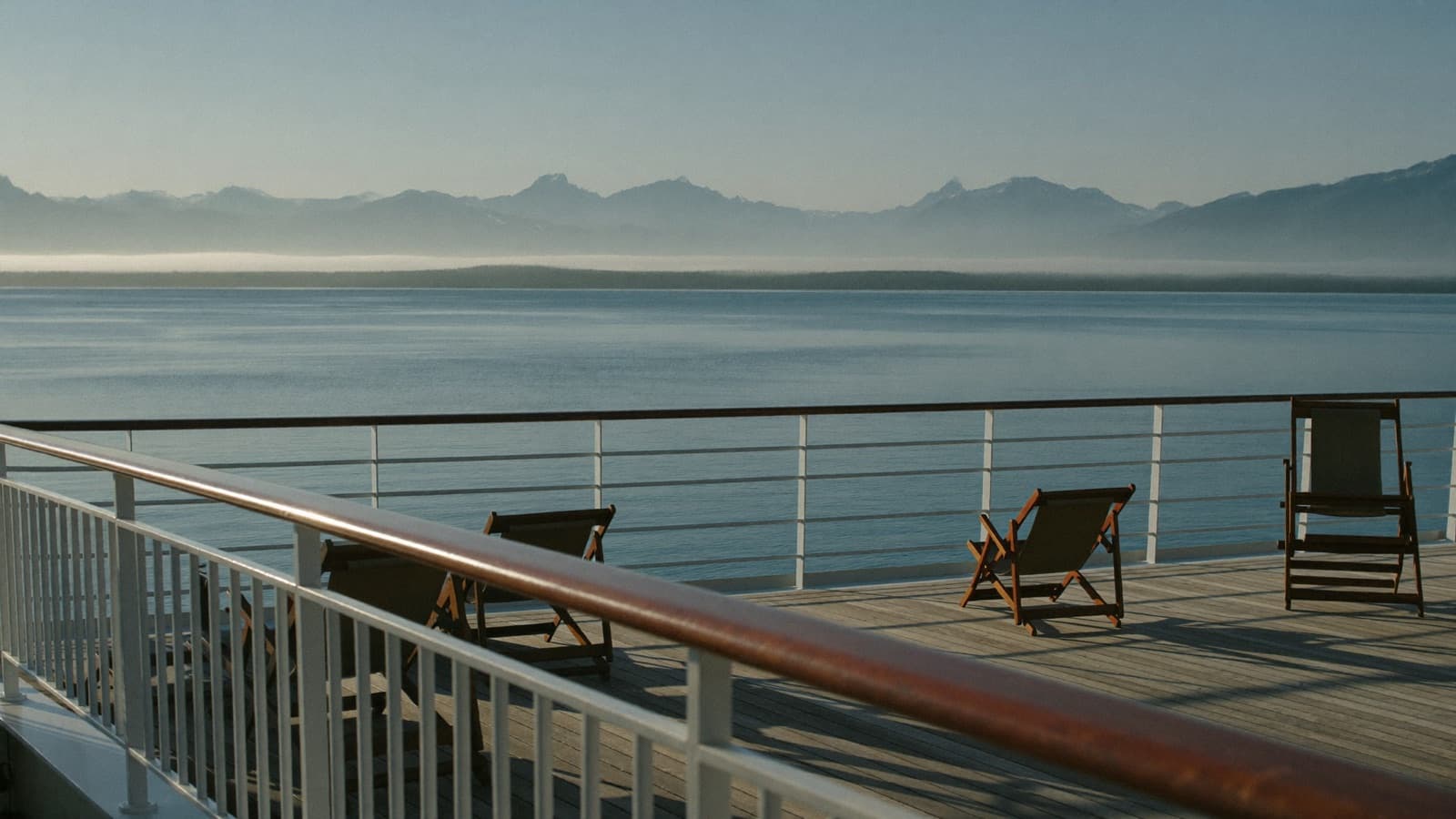
The single most useful thing to internalise before you start: on an Alaska cruise, the ship is transport and viewing platform rather than the destination. Plan accordingly.
What is different about Alaska
| Aspect | Caribbean or Mediterranean | Alaska |
|---|---|---|
| Where you spend time | Pool deck and ashore | Open decks, observation lounges, ashore |
| Weather | Background condition | A planning input for every day |
| Scenic cruising | Rare | One to three days of the itinerary |
| Port size | Cities and resorts | Towns of 1,000 to 32,000 people |
| Excursion cost | $40 to $150 | $45 to $950 |
| Clothing | Light, minimal | Layers, waterproofs, real footwear |
| Balcony use | Constant | Occasional, in short bursts |
| Best hour of the trip | Variable | Often 5:30 am in a fjord |
Choosing your first itinerary
For a first Alaska cruise, we recommend a seven night Inside Passage round trip from Vancouver that includes Glacier Bay. Here is why each part of that matters.
- Seven nights is enough to see the main ports and a glacier without the fatigue of a longer trip. Ten or fourteen nights is better for a second visit.
- Inside Passage is sheltered water, so seasickness is far less likely than on a Gulf of Alaska crossing.
- Round trip means one airport, one hotel booking and a simple return flight, rather than an open jaw booking.
- From Vancouver avoids the Victoria call that United States law requires on Seattle round trips, so more of the week is spent in Alaska.
- With Glacier Bay gives you the best single day available: eight to ten hours, multiple glaciers, and park rangers aboard.
Booking: what to do and in what order
Step 1
Book the cruise nine to twelve months ahead
Alaska rarely discounts late. Booking early gets the best cabin choice and often the best price, and Glacier Bay sailings sell out first.
Step 2
Book travel insurance within 14 to 21 days of the deposit
This window is what qualifies you for a pre existing condition waiver, which cannot be added later.
Step 3
Book flights four to six months ahead
Alaska season fares rise steadily rather than falling. Arrive at least a day early.
Step 4
Book the pre cruise hotel at the same time
Summer rates in Seattle and Vancouver climb from about four months out.
Step 5
Book excursions three to five months ahead
Whale watching, the White Pass railway and helicopter tours sell out on busy dates.
Step 6
Buy packages pre cruise if you will use them
Drinks, WiFi and dining packages are consistently cheaper before you sail than on board.
What to pack, briefly
The full list is in our packing guide. The condensed version is that Alaska is a layering problem, not a warmth problem.
- Waterproof, windproof shell jacket with a hood. Not water resistant
- Fleece or heavy sweater
- Light packable down or synthetic jacket
- Merino or synthetic base layers, never cotton
- Waterproof walking shoes
- Warm hat, light gloves, buff or scarf
- Binoculars, 8x42 or 10x42
- Sleep mask, because in June it barely gets dark
- A small daypack and a dry bag
- Motion sickness remedy, started before you need it
What to expect on board
- Embarkation runs roughly 11:00 am to 3:00 pm with an assigned window. Arriving at your window rather than early is usually faster.
- Your cabin may not be ready until early afternoon, and checked bags can take several hours to arrive. Carry anything you need for the first four hours.
- The muster drill is now mostly electronic: watch a video in the app and visit your assigned station. Do it immediately.
- Naturalist and ranger programming is the part of Alaska cruising most first timers underuse. Attend at least two talks.
- Dress codes vary from none on Norwegian to genuine formality on Cunard. Check yours before packing.
- The daily programme is the single most useful document on the ship. Read it each evening for the next day's all aboard time and scenic cruising schedule.
What to expect ashore
Alaska ports are small, walkable and weather exposed. The structure of a good port day is covered in detail in our shore days guide, but the essentials are these.
- Check the all aboard time, which is 30 to 60 minutes before the published sailing time and is printed in the daily programme.
- Go ashore early on a busy day. The gangway queue builds over the first ninety minutes.
- Do your booked activity first, and keep the town for whatever time remains.
- Be back ninety minutes before all aboard. This single habit removes all port day stress.
- Take your ship card and separate photo identification, plus a waterproof layer regardless of the forecast.
The mistakes first timers make
- Flying in on embarkation day. The single most expensive economy available. A delayed flight means a missed cruise.
- Budgeting only for the fare. Excursions, gratuities, flights and onboard spending typically match or exceed it.
- Packing a heavy coat instead of layers. One thick coat handles one condition. Three thin layers handle all of them.
- Sleeping through the fjord transit. Endicott Arm at 5:30 am is the best hour of the trip and most passengers miss it entirely.
- Booking three excursions in one port. Alaska port days are shorter than they look. One substantial trip is right.
- Assuming the balcony is essential. On ships with a good forward observation lounge, it often is not.
- Paying for a specific side of the ship. Ships rotate at every glacier so that everyone gets the view.
- Not bringing binoculars. The most under packed item on any Alaska cruise.
- Booking late. Alaska prices rarely fall, and Glacier Bay sailings sell out first.
- Treating rain as a disaster. It rains. Boat trips run in it, the glaciers look better in it, and only air tours cancel.
A longer treatment of each of these, with the reasoning, is in common Alaska cruise mistakes.
Frequently asked questions
What should a first time Alaska cruiser know?
What is the best Alaska cruise for a first timer?
How far in advance should I book an Alaska cruise?
Do I need a balcony on my first Alaska cruise?
How many excursions should I book on my first Alaska cruise?
Is an Alaska cruise physically demanding?
Will I get seasick on an Alaska cruise?
Keep researching
The complete overview of the subject.
A step by step planning framework.
What to bring and what to leave.
The errors that cost people the most.
Ranked picks for a first visit.