
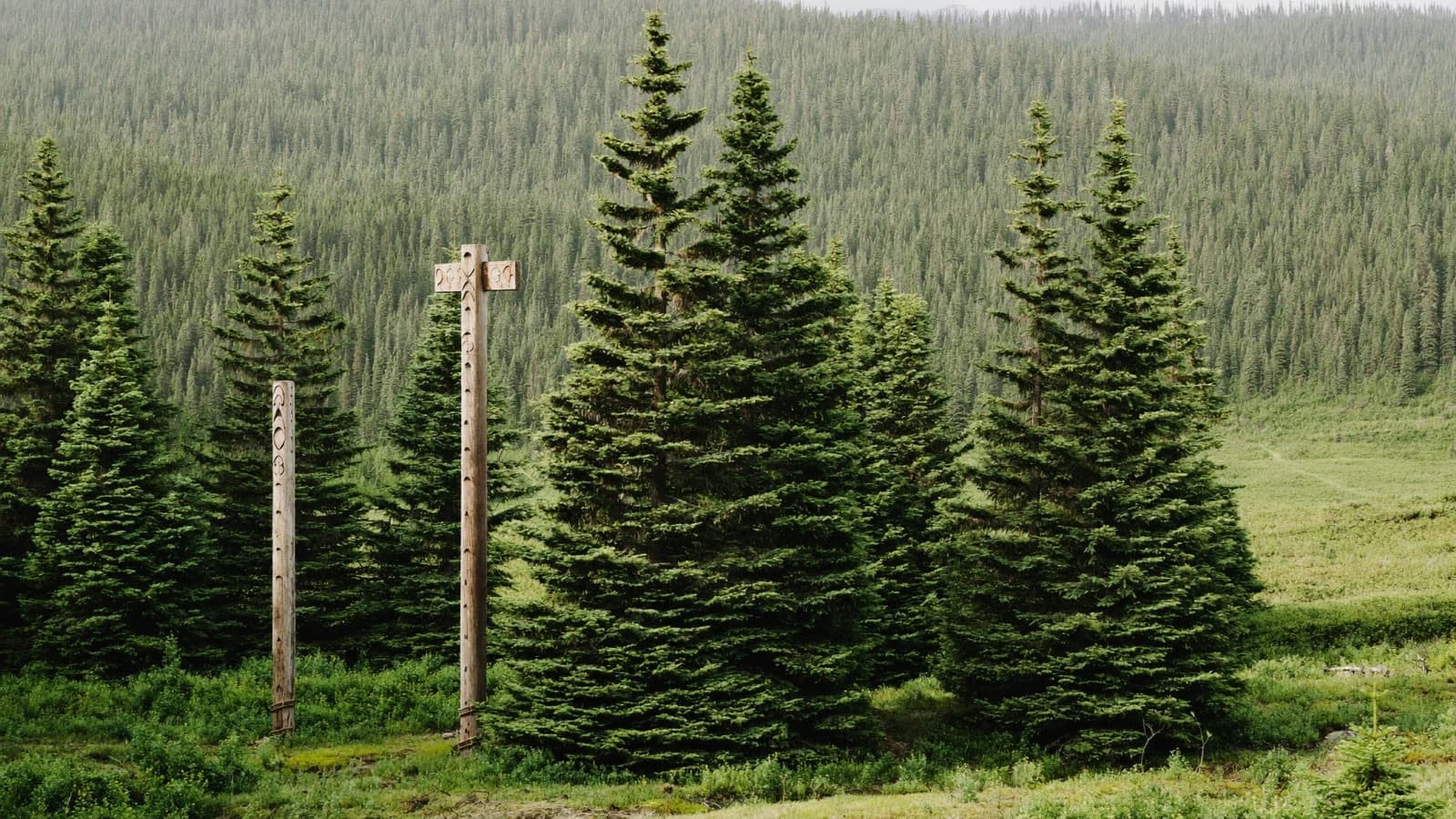
Port town
Ketchikan, Alaska
Ketchikan is the first Alaska port most southbound and Seattle round trip itineraries reach, and it has the most walkable town centre on the circuit. It holds the largest collection of standing totem poles in the world, sits beside the Misty Fjords National Monument, and has salmon running through the middle of town in late summer. Port calls here are often short, which makes choosing well more important than in Juneau.
The short answer
Ketchikan is a compact, highly walkable cruise port known for totem poles, the historic Creek Street boardwalk and access to Misty Fjords National Monument by floatplane. Ships usually berth within a few minutes of the town centre, and port calls typically run six to nine hours. It is also the rainiest port on the circuit, averaging roughly 140 inches a year.
Key points
- The most walkable cruise port in Alaska. Most ships berth a few minutes from the town centre.
- Home to the world's largest collection of standing totem poles, across several sites.
- Misty Fjords flightseeing by floatplane is the signature excursion, weather permitting.
- Salmon run up Ketchikan Creek through the middle of town from roughly July to September.
- Around 140 inches of rain a year. This is a temperate rainforest and it behaves like one.
Quick facts
- Region
- Alaska, United States
- Typical time here
- 6 to 9 hours, commonly 7:00 am to 3:00 pm
- Population
- Around 8,200
- Best months
- June, July, August
- Wildlife
- Bald eagleBlack bearHarbor sealSalmonSitka black tailed deerHumpback whale
What Ketchikan is actually like
Ketchikan is built on a narrow strip between the water and a steep forested hillside, and in places it is built out over the water on pilings. The town is roughly three miles long and a few blocks wide. It calls itself the salmon capital of the world, and for most of the last century the economy ran on fish and timber. Now it runs substantially on cruise passengers.
For a cruise visitor the practical consequence is that Ketchikan is the easiest port to do well without booking anything. Four berths sit at the edge of downtown, and from the gangway you can reach the totem poles at Whale Park, the Creek Street boardwalk and the Southeast Alaska Discovery Center on foot within fifteen minutes.
The other defining fact is the rain. Ketchikan receives roughly 140 inches a year, more than triple London and more than double Seattle. Locals distinguish between rain and weather. A day with light persistent rain is simply a day.
Annual rainfall
~140 in
Among the wettest inhabited places in North America
Walk to town centre
2 to 10 min
From most berths
Misty Fjords flight
~2 hours
Including flight time and briefing
Standing totem poles
Largest collection
Across Saxman, Totem Bight and the Totem Heritage Center
Top attractions in Ketchikan
Creek Street
A boardwalk of wooden buildings on pilings above Ketchikan Creek, originally the town's red light district and now shops, galleries and a small museum at Dolly's House. It takes twenty minutes to walk and is five minutes from the berths. In late summer you can watch salmon fighting up the creek directly beneath the boardwalk.
Totem poles
Ketchikan holds the largest collection of standing totem poles anywhere, spread across three main sites. Saxman Native Village, about 2.5 miles south, has a large pole park and a carving shed with working carvers. Totem Bight State Historical Park, about 10 miles north, sets its poles and a clan house in rainforest beside the water and is the most photogenic. The Totem Heritage Center in town holds original nineteenth century poles brought in from abandoned village sites, unrestored and indoors.
Misty Fjords National Monument
A 2.3 million acre wilderness of granite walled fjords, sea cliffs and waterfalls, about 22 miles east of town. It is reachable only by floatplane or boat. The floatplane trip is roughly two hours including a water landing on a remote lake, and is the most spectacular thing you can do from Ketchikan. It is also entirely weather dependent, and cancellations are common.
Southeast Alaska Discovery Center
A well curated federal visitor centre covering the ecology, Native cultures and resource history of the region. Ninety minutes, indoors, five minutes from the ship, and the best rainy day option in town.
Bear viewing at Neets Bay and Herring Cove
From roughly mid July through August, black bears fish for salmon at Herring Cove, about eight miles from town, and at Neets Bay, reached by floatplane. Herring Cove is the accessible option and can be combined with other stops. Sightings are good but not guaranteed and depend entirely on the salmon run timing that year.
Wildlife around Ketchikan
Ketchikan is a better bear and eagle port than a whale port. The whales are here, but Juneau and Icy Strait Point offer more reliable whale watching, and a short Ketchikan call rarely leaves time for a dedicated whale trip.
| Species | Where | Likelihood | Timing note |
|---|---|---|---|
| Bald eagle | Waterfront, creek mouths | Near certain | Highest concentration during salmon runs |
| Salmon | Ketchikan Creek | Near certain in season | Pink and chum from July, coho into September |
| Black bear | Herring Cove, Neets Bay | Moderate to high in Jul and Aug | Entirely dependent on the salmon run |
| Harbor seal | Harbours and creek mouths | High | Often chasing salmon at the creek mouth |
| Sitka black tailed deer | Roadside forest | Low to moderate | Early morning and evening |
| Humpback whale | Tongass Narrows and beyond | Low to moderate | Better ports exist for whales |
How to plan a Ketchikan port day
Ketchikan calls are often short, sometimes as little as six hours, and that constrains what is realistic. The right approach depends on whether the weather is flying weather.
Step 1
Decide first whether you want Misty Fjords
If yes, book the earliest available flight slot. If the morning flight cancels for weather you may get a later slot, but if you booked the last flight of the day a cancellation ends the option entirely.
Step 2
Otherwise, pick one totem site and walk the rest
Totem Bight or Saxman takes two to three hours including transport. That leaves plenty of time for Creek Street, the Discovery Center and the town on foot.
Step 3
Add bear viewing only in late July or August
Outside the salmon run, bear trips are long odds. Ask the operator directly whether fish are currently in the creek rather than relying on the brochure.
Step 4
Keep the last ninety minutes free
Ketchikan is compact enough that this costs you nothing, and it removes all timing anxiety.
Best time to visit Ketchikan
| Month | Typical high | Rainfall | What is happening |
|---|---|---|---|
| May | 58°F / 14°C | Lower than average | Driest month of the season. Good for flightseeing |
| June | 63°F / 17°C | Moderate | Long days, reliable flights, no salmon yet |
| July | 66°F / 19°C | Moderate | Salmon start running, bears begin appearing |
| August | 65°F / 18°C | High | Peak salmon and bear activity, wetter |
| September | 59°F / 15°C | Highest | Coho running, fewest ships, most flight cancellations |
For flightseeing, May and June give the best odds of flying. For bears and salmon, late July and August. There is a genuine trade off here and you cannot have both at maximum.
Photography tips for Ketchikan
- Overcast is an advantage here. Flat light suits totem poles and rainforest far better than harsh sun, which blows out the carved detail and creates heavy shadows.
- Totem Bight over Saxman for photographs. The poles are set among trees beside the water rather than in an open park, which gives depth and context.
- Shoot Creek Street from the bridge at the top of the boardwalk. The classic composition looks back down the creek with the buildings on pilings on both sides.
- A polariser earns its place. Wet foliage and water surfaces reflect a lot of grey sky. A circular polariser cuts that and saturates the greens.
- Salmon in the creek need a fast shutter and patience. 1/500 second or faster, and expect to wait for a fish to hold position in clear water.
- On a Misty Fjords flight, sit away from the wing strut and clean the window. Ask the pilot which side is best for the route on the day.
Excursions and prices
| Excursion | Duration | Typical price | Effort | Notes |
|---|---|---|---|---|
| Misty Fjords floatplane | 2 to 2.5 hours | $280 to $400 | Easy | The signature Ketchikan excursion. Book the earliest slot for weather resilience. |
| Misty Fjords by boat | 4 to 5 hours | $180 to $260 | Easy | Slower and less spectacular than flying, but far less likely to cancel. |
| Totem Bight and city tour | 2.5 to 3 hours | $60 to $95 | Easy | The best value excursion in Ketchikan. |
| Saxman Native Village with carving demonstration | 2.5 to 3 hours | $70 to $110 | Easy | Choose one with a Native guide. The interpretation is the point. |
| Bear viewing at Herring Cove | 3 to 4 hours | $130 to $200 | Easy | Only worth booking mid July through August. |
| Neets Bay bear viewing by floatplane | 4 hours | $400 to $580 | Moderate | Better bear odds, higher cost, weather dependent. |
| Rainforest canopy zipline | 3.5 hours | $180 to $250 | Active | Runs in rain. Popular with teenagers. |
| Bering Sea Crab Fishermen's Tour | 3.5 hours | $200 to $280 | Easy | On a working crab boat. Better than it sounds and covered from the weather. |
| Snorkelling in Mountain Point | 3 hours | $140 to $190 | Active | Drysuits provided. Genuinely unusual and surprisingly popular. |
Frequently asked questions
What can you do in Ketchikan right from the cruise ship?
Can I walk around Ketchikan from the ship?
Is the Misty Fjords flightseeing tour worth the cost?
Which totem pole site should I visit?
When can I see bears in Ketchikan?
How rainy is Ketchikan really?
How long do ships stay in Ketchikan?
Cruise lines and planning guides for this stop
A detailed guide to Norwegian Cruise Line in Alaska: ships, Glacier Bay access, Freestyle cruising, the Haven suite complex, cabins, dining, pricing and who it suits.
A detailed guide to Royal Caribbean in Alaska: which ships sail, why it does not visit Glacier Bay, family suitability, dining, cabins, pricing and how it compares.
A detailed guide to Princess Cruises in Alaska: which ships sail, Glacier Bay access, the wilderness lodge cruisetour network, cabins, dining, pricing and who the line actually suits.
A detailed guide to Carnival Cruise Line in Alaska: which ships sail, Glacier Bay access, value pricing, cabins, dining, family suitability and honest trade offs.
How to choose Alaska shore excursions: what is worth booking, ship versus independent operators, real prices by port, weather cancellations and how many to book.
A tested Alaska cruise packing list built around layering: what to bring, what quantities, what to leave at home, and what changes by month and cabin type.
How to structure an Alaska cruise port day: real available time, gangway queues, tendering, all aboard timing, what to carry and how to build in a buffer.
How to plan an Alaska cruise with children: which lines suit which ages, wet weather planning, excursions that work for kids, cabin choices and what to pack.