
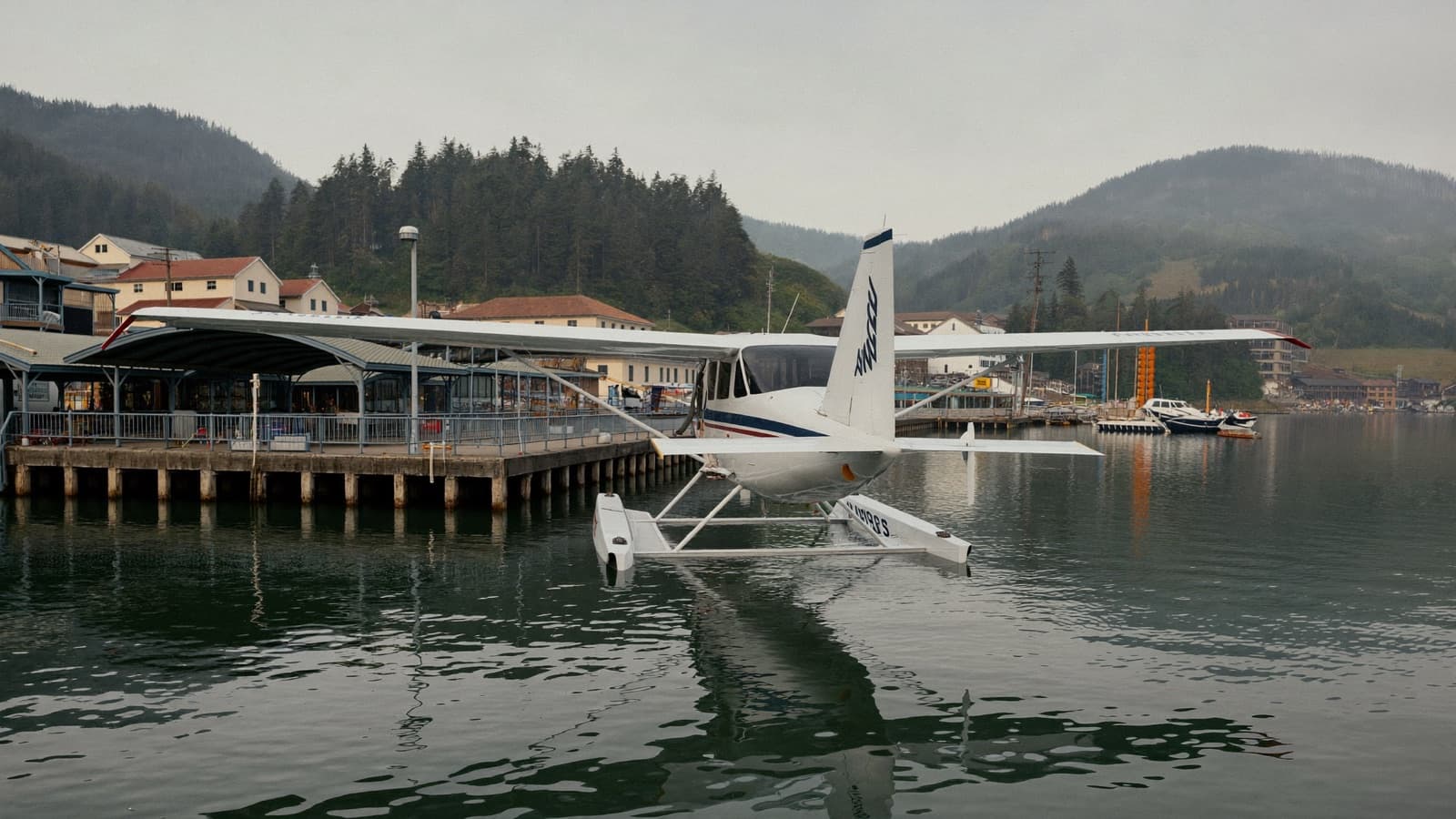
Port town
Juneau, Alaska
Juneau is the busiest port on the Alaska cruise circuit and the one where a badly planned day costs you the most. It offers the state's most accessible glacier, its most reliable whale watching and a compact downtown you can walk in an hour, but it also receives four or five ships at once on peak days. The difference between a great Juneau day and a disappointing one is almost entirely down to what you book and when you leave the ship.
The short answer
Juneau is Alaska's capital and the busiest cruise port in the state. The two things worth doing are Mendenhall Glacier, roughly 12 miles from downtown, and a whale watching trip in Auke Bay, where humpback sighting rates through the summer are exceptionally high. Most ships dock downtown, and a typical port day runs seven to eleven hours.
Key points
- Mendenhall Glacier is 12 miles from the dock and reachable by shuttle for around $45 to $55 return.
- Whale watching from Auke Bay is the most reliable in Alaska, with operators commonly quoting sighting rates above 95 percent in peak season.
- Juneau has no road connection to the rest of North America. Everything arrives by sea or air.
- Up to five ships can be in port at once, so book excursions in advance and get ashore early.
- It rains. Juneau averages well over 200 wet days a year, so plan for it rather than around it.
Quick facts
- Region
- Alaska, United States
- Typical time here
- 7 to 11 hours, commonly 7:00 am to 6:00 pm or 1:00 pm to 10:00 pm
- Population
- Around 32,000
- Best months
- June, July, August
- Wildlife
- Humpback whaleOrcaSteller sea lionHarbor sealBald eagleBlack bearSitka black tailed deer
What Juneau is actually like
Juneau is the only United States state capital with no road access to the rest of the country. It sits on a narrow shelf of land between the Gastineau Channel and a wall of mountains, with the Juneau Icefield, a 1,500 square mile expanse of ice, directly behind the town. Everything and everyone arrives by boat or plane.
That geography explains the shape of a cruise day here. Downtown is small and walkable, roughly six blocks deep before the ground starts going up steeply. Most of what visitors come for is outside town: the glacier is twelve miles north, the whales are in Auke Bay another few miles beyond that, and the icefield is only reachable by helicopter or a serious hike.
The town receives well over a million cruise passengers a season. On a peak July day with four or five ships alongside, the population of the downtown core more than doubles between 8:00 am and 5:00 pm. Locals are used to it and the infrastructure copes, but the difference between arriving at Mendenhall at 8:30 am and 11:30 am is the difference between a quiet glacier viewpoint and a car park full of coaches.
Distance to Mendenhall Glacier
12 miles
Roughly 25 to 30 minutes by road
Annual precipitation
~62 in
Rain gear is not optional
Cruise passengers per season
1.6 million+
The busiest port in Alaska
Typical July high
64°F / 18°C
Cooler on the water and at the glacier
Top attractions in Juneau
Mendenhall Glacier
A 13 mile long glacier flowing out of the Juneau Icefield and ending in Mendenhall Lake. It is the most accessible glacier in Alaska: a visitor centre, a paved viewing area and a network of trails sit directly opposite the face across the water. Nugget Falls, a substantial waterfall beside the glacier, is a flat 1.5 mile round trip walk from the visitor centre and is worth the time.
The glacier has retreated significantly over recent decades, and the visitor centre documents this clearly. The face is now roughly a mile from the viewing platform across the lake, so bring binoculars or a long lens if you want detail.
Whale watching in Auke Bay
Humpback whales feed in the waters around Juneau from roughly May to September, and the concentration in Stephens Passage and around Auke Bay is high enough that most operators offer a sighting guarantee. Trips run three to four hours including transfer, use covered boats with outdoor viewing decks, and normally also produce Steller sea lions, harbour seals and bald eagles.
Mount Roberts Tramway
A cable car from the cruise dock to 1,800 feet, with a nature centre, a short trail network and a view down the Gastineau Channel at the top. It is the only major attraction you can reach directly from the ship on foot, which makes it the sensible fallback if an excursion cancels.
Helicopter glacier landings and dog sledding
Juneau is the best place in Alaska to take a helicopter onto a glacier, because the icefield is right there. Trips range from a straightforward landing and walk on the ice to a full dog sled camp on the snow. It is the most expensive excursion category in Alaska and the most weather dependent.
Downtown, Alaska State Museum and the Red Dog Saloon
The Alaska State Museum is genuinely good and takes about ninety minutes. The Red Dog Saloon is a tourist institution with sawdust on the floor. Both are within ten minutes of the dock, and both are useful ways to fill a rain shortened afternoon.
Wildlife you can realistically see
Juneau offers the highest probability of a good whale sighting of any Alaska cruise port, but probability is the correct framing. No operator can promise an animal, and anyone who does is overselling.
| Species | Where | Likelihood in peak season | Notes |
|---|---|---|---|
| Humpback whale | Auke Bay, Stephens Passage | Very high on a boat trip | Bubble net feeding is possible but not common |
| Bald eagle | Anywhere near water | Near certain | Often several from the dock itself |
| Steller sea lion | Channel markers, rocky haul outs | High on a boat trip | Loud and unmistakable |
| Harbor seal | Mendenhall Lake, harbours | High | Often hauled out on icebergs in the lake |
| Black bear | Mendenhall area, salmon streams | Moderate in July and August | Best odds during salmon runs, from a distance |
| Orca | Open channels | Low to moderate | Less reliable than humpbacks here |
| Mountain goat | Mount Roberts slopes | Low | Occasionally visible from the tram |
How to plan a Juneau port day
Juneau rewards decisiveness. The single most common mistake is trying to do the glacier, a whale trip and downtown in one day without checking how the timings interact.
Step 1
Check how many ships are in port
Juneau publishes a daily cruise ship calendar. Four or five ships means every shuttle, tour and restaurant will be at capacity. Two ships means a materially calmer day.
Step 2
Book the time sensitive thing first
Helicopter tours and whale watching run to fixed departure times and sell out. Book those before anything else, and build the rest of the day around them.
Step 3
Do the glacier and the whales as a combination, or pick one
A combined glacier and whale watching excursion takes roughly five to six hours and is the most efficient use of a standard port day. Doing both independently is possible but leaves no margin.
Step 4
Leave two hours of slack before all aboard
Traffic on Egan Drive backs up badly when several ships sail on the same tide. Independent operators are not obliged to get you back, and the ship will not wait.
Step 5
Keep downtown for the end
The museum, the tram and the shops are all within walking distance of the berth, so they are the right thing to do with whatever time is left rather than the thing you plan around.
Best time to visit Juneau
| Month | Typical high | What is happening | Verdict |
|---|---|---|---|
| May | 55°F / 13°C | Drier than average, fewer ships, whales arriving | Good value, cooler, less reliable whale activity |
| June | 62°F / 17°C | Longest days, whales established, wildflowers | The best all round month |
| July | 64°F / 18°C | Peak crowds, peak whale activity, salmon running | Best wildlife, worst congestion |
| August | 63°F / 17°C | Salmon runs peak, bear activity highest, wetter | Best bear viewing, expect rain |
| September | 56°F / 13°C | Fewer ships, autumn colour, first snow on peaks | Quiet and atmospheric, weather less settled |
If you want one recommendation: mid June to mid July for the best balance of daylight, whale activity and tolerable weather. If bears matter more than crowds, late July into August.
Photography tips for Juneau
- Mendenhall in the morning. The glacier faces roughly southwest across the lake, so morning light is soft and even. By mid afternoon the face is often in flat, contrasty light with heavy haze.
- Bring a long lens for whales. 200mm is workable, 400mm is better. Most of the action happens at 100 to 300 metres and a phone camera will not resolve it.
- Set a fast shutter on the boat. 1/1000 second or faster. The boat moves, the whale moves, and image stabilisation cannot fix both.
- Protect the camera. Juneau rain is fine and persistent rather than heavy. A cheap rain sleeve and a lens cloth in your pocket matter more than any filter.
- Nugget Falls gives scale. Photographs of the glacier alone flatten out. Including the falls or a person on the shoreline is what communicates the size.
- Shoot the tram on the way up, not down. Afternoon cloud typically settles on Mount Roberts, so the clear view is more likely in the morning.
Excursions and prices
| Excursion | Duration | Typical price | Effort | Notes |
|---|---|---|---|---|
| Mendenhall Glacier shuttle | 2 to 3 hours | $45 to $60 | Easy | Return transport only. The cheapest way to see the glacier and the best value in Juneau. |
| Whale watching with glacier stop | 5 to 6 hours | $180 to $260 | Easy | The most efficient use of a full port day. Combines the two headline attractions. |
| Whale watching only | 3.5 to 4.5 hours | $120 to $190 | Easy | Smaller boats cost more and are worth it. Ask the passenger capacity before booking. |
| Helicopter glacier landing | 2 to 3 hours | $400 to $600 | Moderate | Weather cancellations are common. Book early in the port day so a re flight is possible. |
| Helicopter dog sledding on the icefield | 3 to 4 hours | $650 to $950 | Moderate | The most expensive mainstream excursion in Alaska. Genuinely memorable when it flies. |
| Mount Roberts Tramway | 1 to 3 hours | $45 to $55 | Easy | Walk on from the dock. The reliable wet weather fallback. |
| Guided rainforest and glacier hike | 4 to 5 hours | $130 to $200 | Active | Trails around Mendenhall are wet and rooty. Proper footwear required. |
| Salmon bake and wildlife drive | 3 hours | $85 to $130 | Easy | Popular with families and a solid rainy day option. |
| Kayaking in Auke Bay or Mendenhall Lake | 3.5 to 5 hours | $150 to $230 | Active | Cold water paddling. Dry bags and layers supplied by most operators. |
Frequently asked questions
What can you do in Juneau right from the cruise ship?
How do I get to Mendenhall Glacier from the cruise ship?
Is whale watching in Juneau worth it?
How long do ships stay in Juneau?
Can I walk into Juneau from the cruise dock?
What if it rains in Juneau?
Do I need to book Juneau excursions in advance?
Is Juneau safe to explore independently?
Cruise lines and planning guides for this stop
A detailed guide to Princess Cruises in Alaska: which ships sail, Glacier Bay access, the wilderness lodge cruisetour network, cabins, dining, pricing and who the line actually suits.
A detailed guide to Holland America Line in Alaska: mid size ships, Glacier Bay access, Yukon and Denali cruisetours, dining, cabins, pricing and who the line suits.
A detailed guide to Norwegian Cruise Line in Alaska: ships, Glacier Bay access, Freestyle cruising, the Haven suite complex, cabins, dining, pricing and who it suits.
A detailed guide to Royal Caribbean in Alaska: which ships sail, why it does not visit Glacier Bay, family suitability, dining, cabins, pricing and how it compares.
How to choose Alaska shore excursions: what is worth booking, ship versus independent operators, real prices by port, weather cancellations and how many to book.
A tested Alaska cruise packing list built around layering: what to bring, what quantities, what to leave at home, and what changes by month and cabin type.
How to structure an Alaska cruise port day: real available time, gangway queues, tendering, all aboard timing, what to carry and how to build in a buffer.
A method for building a realistic Alaska cruise budget: the fare is rarely half the total. Work through flights, hotels, excursions, onboard spending and the contingency.