
National park
Glacier Bay National Park
Glacier Bay National Park and Preserve is the most sought after scenic day on the Alaska cruise circuit, and access is limited by a National Park Service permit system that allocates a fixed number of ship entries per day. Ships spend most of a day inside the bay with park rangers aboard, reaching the Margerie and Grand Pacific glaciers at the head of the west arm.
The short answer
Glacier Bay is a 3.3 million acre national park and UNESCO World Heritage Site in Southeast Alaska. Cruise ship entry is capped by National Park Service permits, so only some operators visit and only on some sailings. A Glacier Bay day typically runs from early morning to late afternoon, with rangers boarding at the park boundary and the ship holding position at Margerie Glacier for around an hour. Entry is capped by National Park Service permits, so choose the sailing for the itinerary rather than hoping to add it later. Princess and Holland America hold most permits, with Norwegian, Carnival and Seabourn visiting on selected sailings.
Key points
- Entry is limited by National Park Service permits, currently capped at a small number of large cruise ships per day in peak season.
- Princess, Holland America, Norwegian, Carnival, Seabourn and a few others hold entry. Royal Caribbean, Celebrity, Cunard generally do not.
- The ship spends most of a full day inside the bay, usually eight to ten hours.
- Park rangers board from a small vessel at Bartlett Cove and narrate throughout the day.
- The bay was almost entirely filled with ice in 1794 and has since retreated more than 60 miles.
Quick facts
- Region
- Alaska, United States
- Typical time here
- 8 to 10 hours of scenic cruising, no landing
- Best months
- June, July, August
- Wildlife
- Humpback whaleOrcaSteller sea lionHarbor sealSea otterBrown bearMountain goatPuffinKittiwake
What Glacier Bay actually is
Glacier Bay National Park and Preserve covers 3.3 million acres of fjord, ice and coastal mountain in Southeast Alaska, and forms part of a UNESCO World Heritage Site that spans the border with Canada. Its significance is not simply that it contains glaciers. It is that the bay is one of the fastest documented glacial retreats on earth.
When George Vancouver's expedition charted this coast in 1794, what is now a 65 mile long bay was a wall of ice several thousand feet thick at the entrance. By the time John Muir visited in 1879, the ice had retreated some 40 miles. Today the head of the bay is over 60 miles from where the ice front stood in 1794. The forest you see near the mouth of the bay is several hundred years old; near the head, the land has been ice free for barely a century and is still bare rock and pioneer vegetation.
That is what makes a Glacier Bay day different from any other glacier viewing on an Alaska itinerary: you are travelling forward through roughly 250 years of ecological succession in a single afternoon, and the park rangers aboard are there specifically to explain it.
Park area
3.3 million acres
Larger than Connecticut
Retreat since 1794
Over 60 miles
Among the fastest documented anywhere
Tidewater glaciers
7
Glaciers reaching the sea within the park
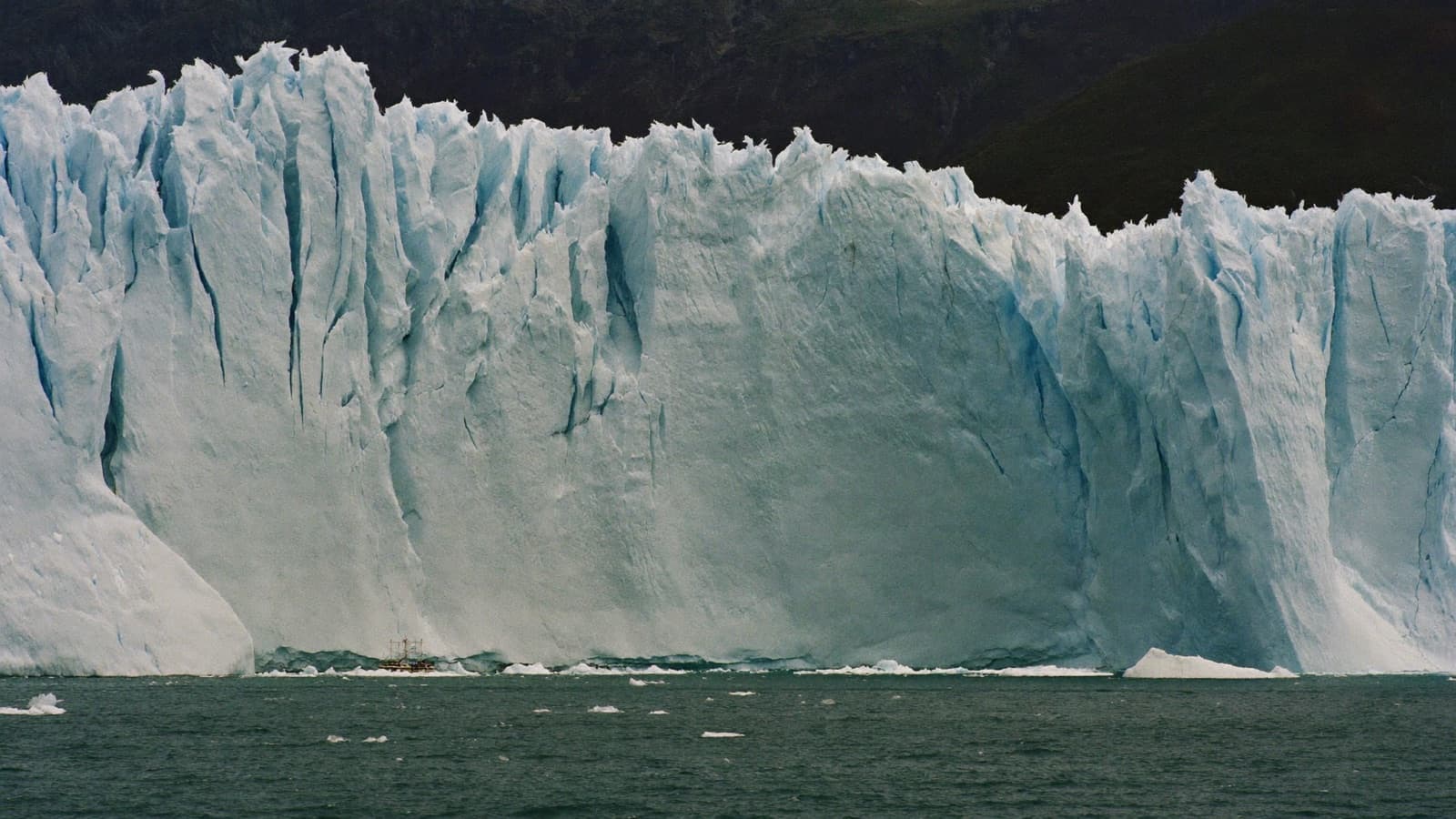
Margerie Glacier face
~250 ft above water
With roughly 100 ft below the surface
The permit system, and why some lines cannot enter
This is the single most consequential fact for anyone choosing an Alaska cruise, and it is poorly explained by most operators.
The National Park Service limits how many vessels may enter Glacier Bay each day during the peak season, in order to reduce disturbance to humpback whales and other wildlife. Entry for large cruise ships is allocated through a concession contract system, awarded to specific operators for multi year terms. It is not a permit you can buy on the day, and a line without an allocation simply cannot go.
| Cruise line | Glacier Bay access | What they use instead |
|---|---|---|
| Princess Cruises | Frequent, on a large share of sailings | College Fjord, Hubbard on Gulf routes |
| Holland America | Frequent | Hubbard Glacier, Tracy Arm |
| Norwegian | Selected sailings | Dawes Glacier, Hubbard Glacier |
| Carnival | Selected sailings | Tracy Arm, Endicott Arm |
| Seabourn | Selected sailings | Small fjords inaccessible to large ships |
| Royal Caribbean | No | Hubbard Glacier, Dawes Glacier |
| Celebrity | No | Hubbard Glacier, Dawes Glacier |
| Disney | Not standard | Dawes Glacier, Tracy Arm |
| Cunard | Not standard | Hubbard Glacier, Tracy Arm |
What a Glacier Bay day actually looks like
Unlike a port day, nobody goes ashore. The ship enters the bay, spends the day working up to the glaciers and back out, and everything happens from the deck. Here is the typical shape of it.
Step 1
Around 6:00 am: rangers board at the park boundary
A small National Park Service vessel comes alongside near Bartlett Cove and rangers transfer aboard, along with a cultural interpreter from the Huna Tlingit, whose ancestral homeland this is.
Step 2
Morning: transit up the bay
The ship works north for several hours. This is the succession stretch: mature spruce and hemlock forest near the mouth gives way to alder and willow, then to bare moraine. Rangers narrate over the public address system and hold talks in the theatre.
Step 3
Late morning to early afternoon: Margerie Glacier
The ship holds position roughly a quarter mile from the face of Margerie Glacier, typically for around an hour, and usually rotates 360 degrees so that both sides of the ship get the same view. The Grand Pacific Glacier sits immediately alongside, darker and heavily debris covered.
Step 4
Early afternoon: Johns Hopkins Inlet or Lamplugh Glacier
Depending on ice conditions and the seasonal closure protecting harbour seal pupping, the ship may enter Johns Hopkins Inlet or view Lamplugh Glacier. Johns Hopkins is often restricted before late June or early July.
Step 5
Afternoon: transit back out
The return runs down the bay with different light and often better wildlife viewing, since animals are more active later in the day.
Step 6
Around 4:00 to 5:00 pm: rangers disembark
The rangers leave the same way they arrived, and the ship exits toward Icy Strait.
Wildlife in Glacier Bay
Glacier Bay is a protected marine environment and the wildlife density reflects that. The restriction on vessel numbers exists in large part to protect humpback whales, and it works.
| Species | Where in the bay | Likelihood | Notes |
|---|---|---|---|
| Humpback whale | Lower and middle bay | High | Often multiple sightings during the transit |
| Harbor seal | On ice floes near glacier faces | Very high | Johns Hopkins is a major pupping site, hence the seasonal closure |
| Sea otter | Lower bay | High | Population has grown substantially since recolonising the bay |
| Steller sea lion | South Marble Island | High | A major haul out, usually passed in the morning |
| Tufted puffin and kittiwake | South Marble Island, cliff faces | High | Bring binoculars, they are small |
| Brown bear | Shorelines and beaches | Moderate | Scan the beaches with binoculars during the transit |
| Mountain goat | Cliffs near Gloomy Knob | Moderate to high | White dots on grey rock, often with kids in summer |
| Orca | Anywhere in the bay | Low to moderate |
Best time for a Glacier Bay cruise
| Month | Conditions | Notes |
|---|---|---|
| May | Cool, more snow on peaks, less green | Johns Hopkins Inlet usually closed for seal pupping |
| June | Long days, greening lower bay | Excellent all round. Johns Hopkins may open late in the month |
| July | Warmest, most wildlife active | Best whale activity, busiest sailings |
| August | Warm, wetter, low cloud more likely | Good wildlife, higher chance of obscured peaks |
| September | Cooler, autumn colour, clearer air | Often the sharpest visibility of the season |
There is no bad month for Glacier Bay, but there is a real trade off between the reliable warmth and wildlife activity of July and the clearer air and quieter ships of September. If photography is your priority, September repays the gamble more often than people expect.
Photography tips for Glacier Bay
- Expose for the ice, not the scene. Glacial ice fools meters into underexposure. Add half a stop to a full stop of positive exposure compensation or you will get grey ice and blocked shadows.
- Include something for scale. A glacier face photographed alone is meaningless. A tour boat, a kayak, a flock of kittiwakes, or the ship's rail in the frame is what communicates 250 feet of ice.
- Watch for the ice before you hear it. Sound reaches you several seconds after a calving event at a quarter mile. If you wait for the crack, you have missed it. Watch the face, not the sky.
- Shoot the blue. Dense glacial ice absorbs red light and reflects blue. The most saturated blue appears in freshly calved faces, deep crevasses and on overcast days, not in bright sun.
- A 70 to 200mm lens does most of the work. Wider than 24mm makes the glacier tiny; longer than 300mm loses the context. Two bodies or a versatile zoom saves changing lenses in spray.
- Batteries drain fast in the cold. Carry a spare in an inside pocket. Cold lithium cells recover when warmed, so a dead battery is often just a cold one.
Glacier Bay compared with the alternatives
Glacier Bay is the most complete glacier day available on a cruise, but it is not automatically the most dramatic, and travellers whose itinerary does not include it should not feel short changed.
| Destination | Time in the ice | Distinguishing feature | Ranger programme |
|---|---|---|---|
| Glacier Bay | 8 to 10 hours | Multiple glaciers, ecological succession, national park | Yes, NPS rangers plus Huna Tlingit interpreter |
| Hubbard Glacier | 1 to 2 hours | The widest actively calving face on any Alaska route, 6 miles across | No |
| Tracy Arm | 3 to 5 hours | Narrow fjord with 3,000 ft walls, very intimate | No |
| Endicott Arm | 3 to 5 hours | Dawes Glacier, heavy floating ice, often seals | No |
| College Fjord | 2 to 3 hours | Many glaciers visible at once in one panorama | No |
If you want scale, Hubbard is more impressive than anything in Glacier Bay. If you want intimacy, Tracy Arm beats it. What Glacier Bay offers that none of the others do is a full day, several glaciers, protected wildlife, and expert interpretation from people whose job is to explain what you are looking at.
Excursions and prices
| Excursion | Duration | Typical price | Effort | Notes |
|---|---|---|---|---|
| Ranger programme on deck and in the theatre | All day | Included | Easy | The single best thing available. Attend at least one theatre talk. |
| Huna Tlingit cultural presentation | 45 to 60 minutes | Included | Easy | Glacier Bay is Huna Tlingit homeland. This is the context most passengers miss. |
| Forward observation lounge viewing | All day | Included | Easy | Warm, glass fronted and the best position on most ships. |
| Open deck viewing at the glacier face | 1 to 2 hours | Included | Easy | Cold and windy. Worth every minute. Dress properly. |
Frequently asked questions
Which cruise lines go to Glacier Bay?
Why can only some ships enter Glacier Bay?
How long does a ship spend in Glacier Bay?
Do you get off the ship in Glacier Bay?
Is Glacier Bay better than Hubbard Glacier?
Which side of the ship is best in Glacier Bay?
How cold is it in Glacier Bay?
Cruise lines and planning guides for this stop
A detailed guide to Princess Cruises in Alaska: which ships sail, Glacier Bay access, the wilderness lodge cruisetour network, cabins, dining, pricing and who the line actually suits.
A detailed guide to Holland America Line in Alaska: mid size ships, Glacier Bay access, Yukon and Denali cruisetours, dining, cabins, pricing and who the line suits.
A detailed guide to Norwegian Cruise Line in Alaska: ships, Glacier Bay access, Freestyle cruising, the Haven suite complex, cabins, dining, pricing and who it suits.
A detailed guide to Seabourn in Alaska: ultra luxury small ships, Ventures by Seabourn kayak and zodiac programme, suites, dining, all inclusive pricing and who it suits.
A tested Alaska cruise packing list built around layering: what to bring, what quantities, what to leave at home, and what changes by month and cabin type.
How to choose an Alaska cruise cabin: deck and position, noise, motion, obstructed views, connecting cabins, guarantee rates and what to check on the deck plan.
How to structure an Alaska cruise port day: real available time, gangway queues, tendering, all aboard timing, what to carry and how to build in a buffer.
Whether a balcony is worth the money on an Alaska cruise: how much you actually use it, what the ship rotation means for views, and when an interior is the smarter choice.