
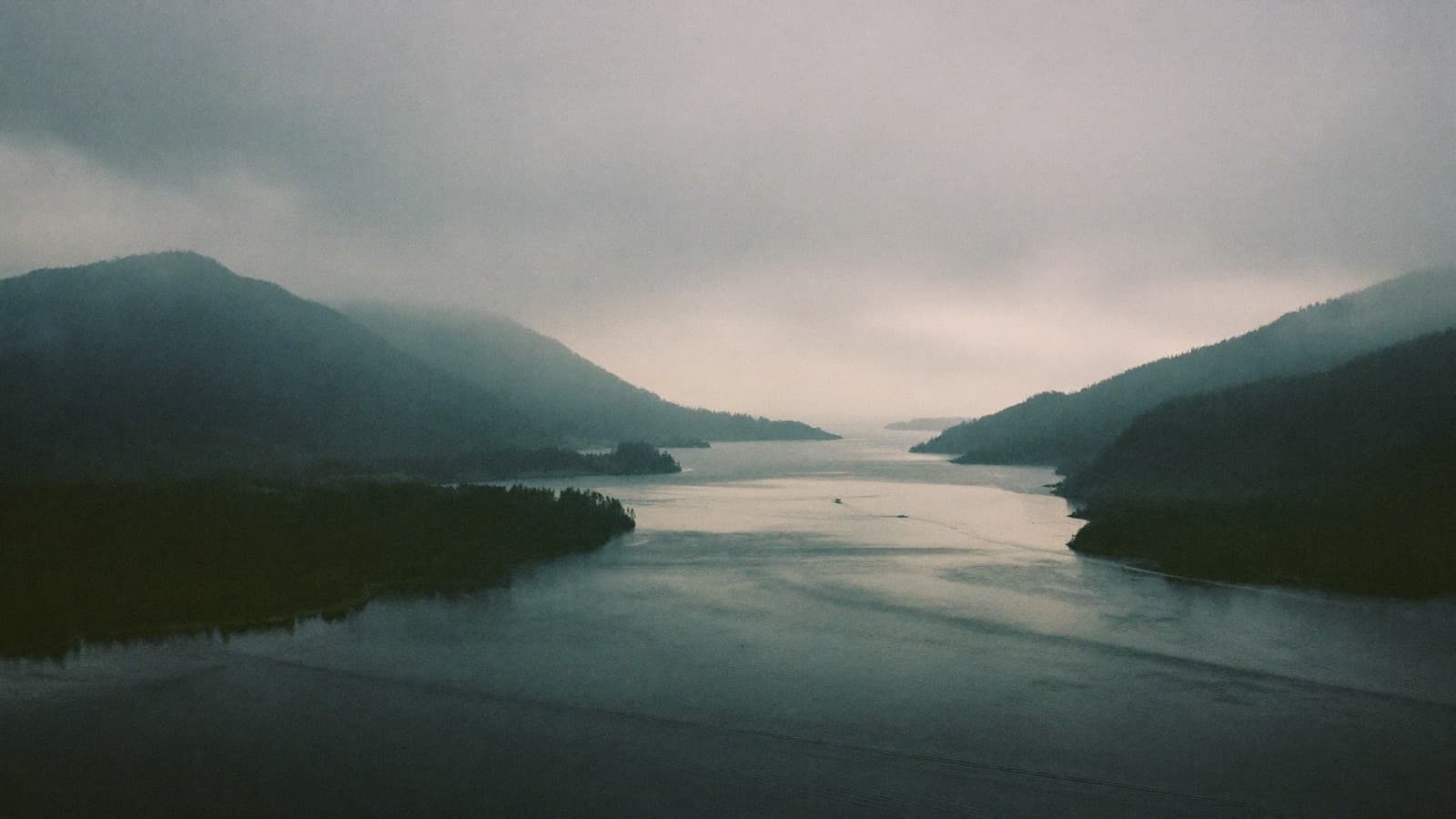
Fjord
College Fjord
College Fjord in Prince William Sound holds one of the densest concentrations of tidewater glaciers anywhere, with more than a dozen visible from a single stretch of water. It appears almost exclusively on Gulf of Alaska itineraries running to or from Whittier, usually on the final evening or first morning of the voyage.
The short answer
College Fjord is a 30 mile fjord in Prince William Sound containing five tidewater glaciers and more than a dozen others, named by an 1899 expedition after east coast colleges. Ships typically spend two to three hours here on Gulf of Alaska itineraries to or from Whittier, with Harvard Glacier at the head as the centrepiece.
Key points
- Contains five tidewater glaciers and more than a dozen alpine and valley glaciers.
- Glaciers were named after colleges by the 1899 Harriman Alaska Expedition, with women's colleges on one side and men's on the other.
- Harvard Glacier at the head is over a mile wide and is advancing.
- Visited almost exclusively on Gulf of Alaska itineraries to or from Whittier.
- Usually a two to three hour evening or early morning transit.
Quick facts
- Region
- Alaska, United States
- Typical time here
- 2 to 3 hours of scenic cruising
- Best months
- June, July, August
- Wildlife
- Sea otterHarbor sealHumpback whaleBald eagleKittiwakeDall's porpoise
What College Fjord is
College Fjord is a 30 mile arm of Prince William Sound, north of Whittier. Its distinguishing feature is density: within a relatively short stretch of water there are five tidewater glaciers reaching the sea and more than a dozen further glaciers hanging in the valleys above. On a clear day it is possible to see numerous glaciers at once, which is not true of Glacier Bay, Tracy Arm or Hubbard.
The names come from the Harriman Alaska Expedition of 1899, a scientific voyage funded by railroad magnate Edward Harriman that carried an extraordinary roster of naturalists including John Muir and John Burroughs. The expedition named the glaciers along one side after women's colleges, Bryn Mawr, Smith, Vassar, Wellesley and Barnard, and those on the other after men's colleges, Harvard, Yale, Amherst and Dartmouth. Harvard and Yale, the two largest, are at the head.
Harvard Glacier is over a mile wide at its face and is one of the few large Alaska glaciers currently advancing. Yale Glacier, in a neighbouring arm, is retreating rapidly, which makes the fjord a useful side by side illustration of how much local geometry drives glacier behaviour.
What the transit involves
College Fjord is almost always a bookend to a Gulf of Alaska itinerary. Northbound ships heading for Whittier typically enter in the evening before docking the next morning. Southbound ships often transit in the early morning after leaving Whittier.
- Approach through Prince William Sound, which is itself excellent for sea otters and often for whales.
- Entry into the fjord, with glaciers appearing progressively on both sides.
- Holding position near Harvard Glacier at the head, typically for 30 to 60 minutes.
- Rotation so both sides of the ship get an equal view.
- Exit and continue to Whittier or south toward the Inside Passage.
Wildlife in College Fjord and Prince William Sound
Prince William Sound is a different ecosystem from the Southeast Alaska fjords, and the wildlife reflects that. Sea otters here are abundant, and the sound is one of the better places on any Alaska itinerary to see them from a large ship.
| Species | Where | Likelihood | Notes |
|---|---|---|---|
| Sea otter | Prince William Sound approach | High | Often in large rafts, visible from the ship |
| Harbor seal | On ice near glacier faces | High | |
| Kittiwake | Near glacier faces | High | Large feeding flocks where meltwater meets salt water |
| Humpback whale | Prince William Sound | Moderate | |
| Dall's porpoise | Open sound | Moderate | Fast, distinctive black and white, often bow riding |
| Bald eagle | Throughout | High | |
| Black bear | Shorelines | Low |
Best time to visit College Fjord
College Fjord is only accessible on Gulf of Alaska itineraries, which run from roughly mid May to early September. Because the transit often happens in the evening, daylight length matters more here than temperature.
| Month | Sunset at this latitude | Notes |
|---|---|---|
| May | ~10:30 pm | Cool, snow low on the peaks, dramatic |
| June | ~11:30 pm | Longest days. An evening transit is in full light |
| July | ~11:15 pm | Warmest, excellent light late into the evening |
| August | ~10:00 pm | Good, with more cloud |
| September | ~8:45 pm | An evening transit may end in darkness |
For College Fjord specifically, June and July are clearly best, because the long evening daylight means an evening transit is fully visible. A September evening transit can finish after dark.
Photography tips for College Fjord
- This is a panorama location. The whole point of College Fjord is the number of glaciers visible at once. A wide lens or a stitched sequence tells that story better than any single telephoto shot.
- Evening light is long and warm. Between roughly 8:00 pm and 10:30 pm in June the light is low, warm and side lit onto the glaciers. It is the best light of the trip.
- Harvard Glacier needs a scale reference. At over a mile wide it flattens out. Include the shoreline or a small boat if one is present.
- Watch for kittiwake flocks at the face. Thousands of birds feeding where fresh meltwater meets salt water is a photograph in itself, and easy to miss while looking at the ice.
- A tripod is finally useful here. Because the ship holds position and the light is low, this is one of the few places on an Alaska cruise where a small travel tripod on deck earns its space.
- Shoot both arms. Ships usually favour the Harvard side, but the women's college glaciers on the western wall are closer to the ship for much of the transit.
Excursions and prices
| Excursion | Duration | Typical price | Effort | Notes |
|---|---|---|---|---|
| Deck viewing during the transit | 2 to 3 hours | Included | Easy | Usually the final evening of a northbound cruise. Do not spend it packing. |
| Naturalist commentary | During the transit | Included | Easy | Princess and Holland America both narrate this well. |
| Forward observation lounge | 2 to 3 hours | Included | Easy | Good when wind on the open deck makes standing outside unpleasant. |
Frequently asked questions
Why are the glaciers in College Fjord named after colleges?
Which cruises visit College Fjord?
How long do ships spend in College Fjord?
Is College Fjord better than Glacier Bay?
Is Harvard Glacier advancing?
What time of day does a ship transit College Fjord?
Cruise lines and planning guides for this stop
A detailed guide to Princess Cruises in Alaska: which ships sail, Glacier Bay access, the wilderness lodge cruisetour network, cabins, dining, pricing and who the line actually suits.
A detailed guide to Holland America Line in Alaska: mid size ships, Glacier Bay access, Yukon and Denali cruisetours, dining, cabins, pricing and who the line suits.
A detailed guide to Norwegian Cruise Line in Alaska: ships, Glacier Bay access, Freestyle cruising, the Haven suite complex, cabins, dining, pricing and who it suits.
A detailed guide to Royal Caribbean in Alaska: which ships sail, why it does not visit Glacier Bay, family suitability, dining, cabins, pricing and how it compares.
A tested Alaska cruise packing list built around layering: what to bring, what quantities, what to leave at home, and what changes by month and cabin type.
A method for building a realistic Alaska cruise budget: the fare is rarely half the total. Work through flights, hotels, excursions, onboard spending and the contingency.
How to structure an Alaska cruise port day: real available time, gangway queues, tendering, all aboard timing, what to carry and how to build in a buffer.
How to choose an Alaska cruise cabin: deck and position, noise, motion, obstructed views, connecting cabins, guarantee rates and what to check on the deck plan.