
Fjord
Tracy Arm Fjord
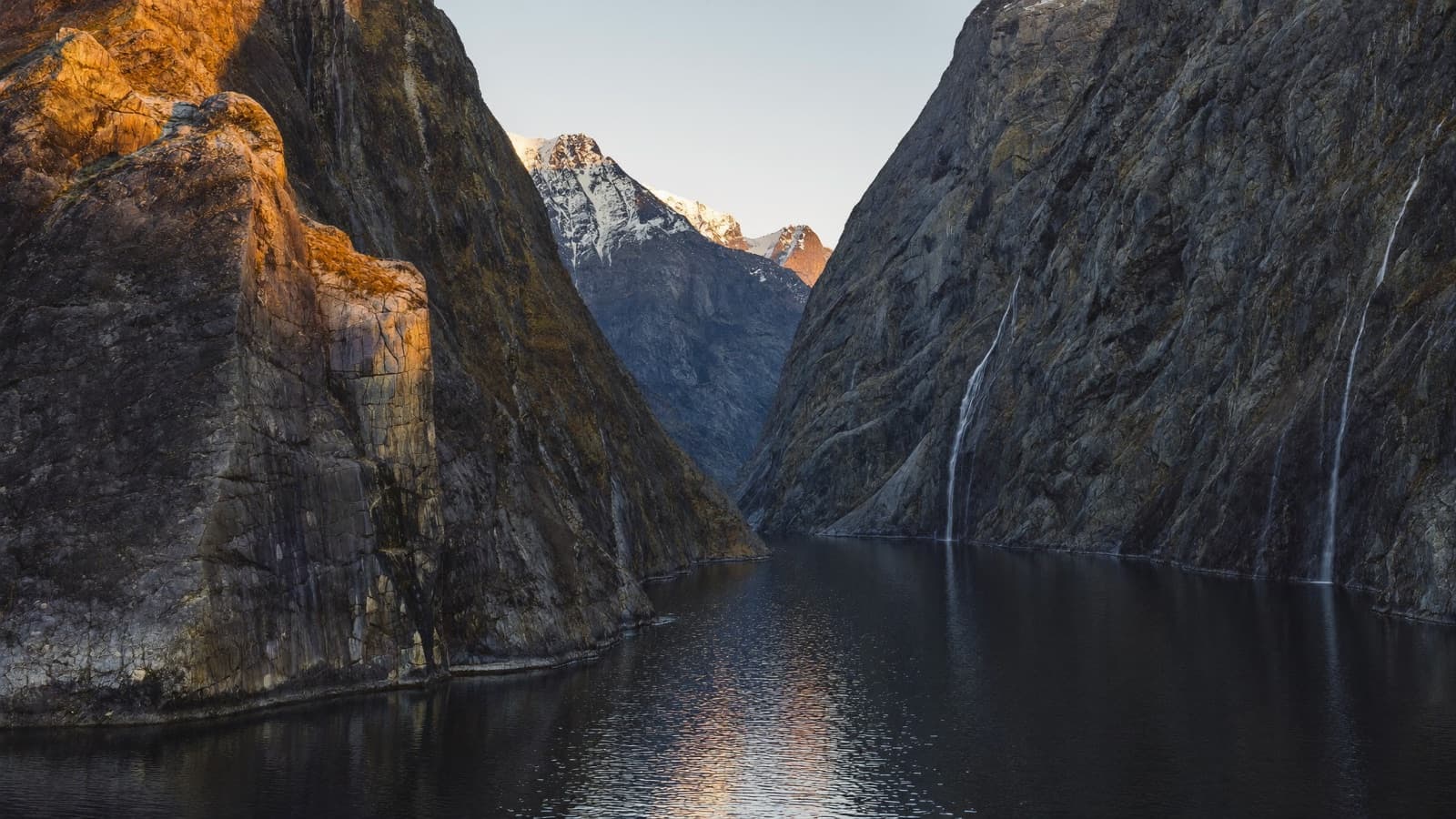
Tracy Arm is a narrow, steep walled fjord roughly 30 miles south of Juneau, ending at the North and South Sawyer glaciers. Its walls rise several thousand feet almost vertically from water more than a thousand feet deep, and the fjord is narrow enough that a large ship transiting it feels genuinely enclosed. Ice conditions frequently prevent large vessels from reaching the glaciers themselves.
The short answer
Tracy Arm is a narrow fjord south of Juneau within the Tracy Arm Fords Terror Wilderness, ending at the twin Sawyer glaciers. It is the most intimate glacier experience on the Alaska circuit because the fjord is barely half a mile wide in places with 3,000 foot walls. Large ships often cannot reach the glacier face because of floating ice, and may substitute Endicott Arm.
Key points
- A narrow fjord with walls rising up to 3,000 feet almost vertically from the water.
- Ends at the North and South Sawyer glaciers, both actively calving.
- Large ships frequently cannot reach the glaciers due to ice, and may turn back or divert.
- Part of the Tracy Arm Fords Terror Wilderness within Tongass National Forest.
- The most intimate glacier experience available from a large ship in Alaska.
Quick facts
- Region
- Alaska, United States
- Typical time here
- 3 to 5 hours of scenic cruising
- Best months
- July, August
- Wildlife
- Harbor sealMountain goatBlack bearBald eagleHumpback whaleArctic tern
What Tracy Arm is like
Tracy Arm runs about 30 miles inland from Holkham Bay, roughly 45 miles south of Juneau. It was carved by ice that has since retreated to the head of the fjord, leaving a classic glacial trough: U shaped, extremely deep, and walled by granite that rises in places 3,000 feet in a near vertical sweep from water that is itself over 1,000 feet deep.
The character of the place is entirely different from Glacier Bay. Glacier Bay is wide, open and full of light. Tracy Arm is a corridor. On a ship transiting it you can often see waterfalls on both walls at once, and passengers on deck instinctively lower their voices.
At the head are the two Sawyer glaciers. South Sawyer is the more active and the more frequently visited; North Sawyer sits in a side arm. Both calve, and the fjord is often choked with floating ice as a result, which is precisely the problem for large ships.
Why large ships often turn back
This is the single most important thing to understand before booking a Tracy Arm itinerary, and it is regularly glossed over in cruise line marketing.
- A shallow moraine bar sits across the entrance at Holkham Bay, restricting draft for the largest vessels.
- The fjord narrows to roughly half a mile in places, which leaves very little room for a 1,000 foot ship to manoeuvre or turn.
- Calved ice accumulates in the upper fjord and can be dense enough that a large hull cannot safely proceed.
- Consequently, many large ships enter partway, turn and exit, or divert to Endicott Arm and Dawes Glacier, which is wider and more consistently navigable.
Some ships offer a small boat excursion from Juneau into Tracy Arm instead, which is the only reliable way to reach the Sawyer glacier faces. A fast catamaran can get where a cruise ship cannot, and it typically runs eight to nine hours from Juneau.
Wildlife in Tracy Arm
The steep walls and dense floating ice make Tracy Arm unusually good for two specific animals: harbour seals, which use the ice for pupping, and mountain goats on the cliffs.
| Species | Where | Likelihood | Notes |
|---|---|---|---|
| Harbor seal | On ice near the Sawyer glaciers | Very high if you reach the face | Major pupping area, hence vessel approach limits in early summer |
| Mountain goat | Cliff faces along the fjord | Moderate to high | Scan the ledges with binoculars, particularly on the north wall |
| Black bear | Shoreline and stream mouths | Low to moderate | |
| Bald eagle | Throughout | High | |
| Arctic tern | Near the glacier face | Moderate | Migrates further than any other bird on earth |
| Humpback whale | Holkham Bay at the entrance | Moderate | More likely at the mouth than inside the fjord |
Best time to visit Tracy Arm
Timing matters more here than at any other glacier stop, because ice conditions are the limiting factor and they improve as the season progresses.
| Month | Ice conditions | Likelihood of reaching the glaciers |
|---|---|---|
| May | Heavy | Low for large ships |
| June | Moderate to heavy | Moderate. Seal pupping restrictions may also apply |
| July | Moderate | Best odds of the season |
| August | Moderate | Good, with the warmest conditions |
| September | Variable | Reasonable, but weather is less settled |
If reaching the Sawyer glaciers matters to you, July and August give the best chance, and a small boat excursion from Juneau gives a far better chance than any large ship.
Photography tips for Tracy Arm
- Shoot vertically. This is one of the few places on an Alaska cruise where a portrait orientation frame genuinely works better, because the story is height rather than width.
- The waterfalls are the subject as much as the ice. Meltwater pours off both walls, and after rain there can be dozens visible at once.
- Watch the icebergs for colour. Ice that has rolled shows deep blue and sometimes banded black from entrained sediment. Some of the best photographs in Tracy Arm are of individual floating bergs rather than the glacier.
- Use a wide lens for the corridor and a long lens for the walls. 16 to 24mm captures the enclosure; 200mm isolates a waterfall or a goat on a ledge.
- Early morning is common here. Many ships transit at dawn, which gives beautiful low light on one wall and deep shadow on the other. Expose for the lit wall.
- Deck rails are your tripod. Light is often low in the fjord. Bracing against a rail buys you two or three stops of stability.
Excursions and prices
| Excursion | Duration | Typical price | Effort | Notes |
|---|---|---|---|---|
| Deck viewing during the transit | 3 to 5 hours | Included | Easy | Dress warmly. The fjord is colder than open water and often windy. |
| Tracy Arm small boat excursion from Juneau | 8 to 9 hours | $220 to $340 | Easy | The only reliable way to reach the Sawyer glacier faces. Consumes a full Juneau port day. |
| Onboard naturalist commentary | During the transit | Included | Easy | Quality varies substantially by cruise line. |
Frequently asked questions
What is Tracy Arm and where is it?
Why do cruise ships sometimes not enter Tracy Arm?
Is Tracy Arm as good as Glacier Bay?
What is the difference between Tracy Arm and Endicott Arm?
Can I get close to Sawyer Glacier on a cruise ship?
What wildlife is in Tracy Arm?
Cruise lines and planning guides for this stop
A detailed guide to Carnival Cruise Line in Alaska: which ships sail, Glacier Bay access, value pricing, cabins, dining, family suitability and honest trade offs.
A detailed guide to Disney Cruise Line in Alaska: which ships sail, family programming, rotational dining, cabins, glacier viewing, pricing and whether it is worth the premium.
A detailed guide to Holland America Line in Alaska: mid size ships, Glacier Bay access, Yukon and Denali cruisetours, dining, cabins, pricing and who the line suits.
A detailed guide to Norwegian Cruise Line in Alaska: ships, Glacier Bay access, Freestyle cruising, the Haven suite complex, cabins, dining, pricing and who it suits.
A tested Alaska cruise packing list built around layering: what to bring, what quantities, what to leave at home, and what changes by month and cabin type.
How to structure an Alaska cruise port day: real available time, gangway queues, tendering, all aboard timing, what to carry and how to build in a buffer.
How to choose Alaska shore excursions: what is worth booking, ship versus independent operators, real prices by port, weather cancellations and how many to book.
Whether a balcony is worth the money on an Alaska cruise: how much you actually use it, what the ship rotation means for views, and when an interior is the smarter choice.