
Wildlife
Wildlife You Can See on an Alaska Cruise
Alaska cruise marketing shows bears, whales and eagles in the same photograph. Reality is a set of probabilities that vary by species, port, month and whether you booked a boat. This is what you can genuinely expect.
The short answer
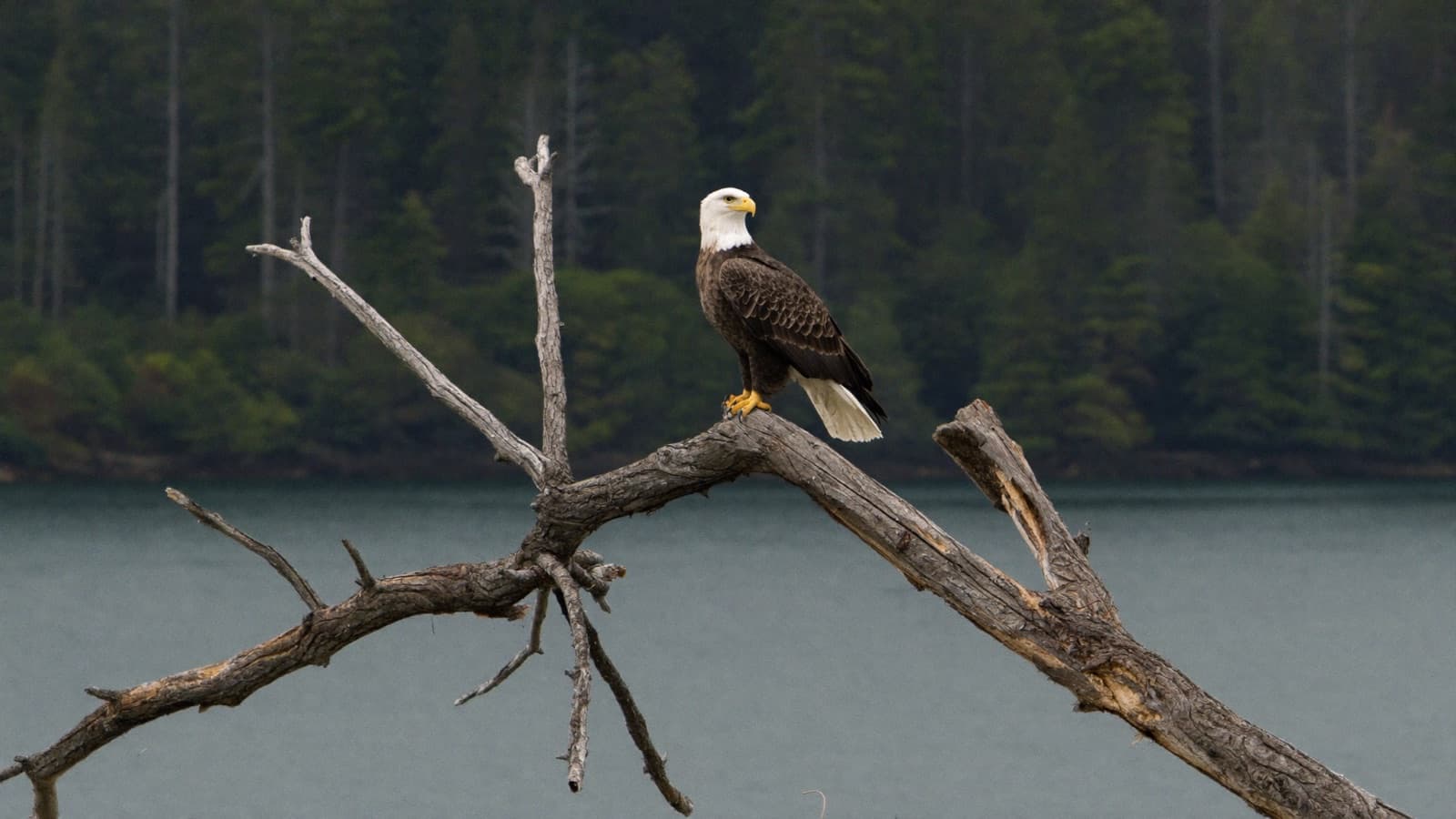
On a seven night Alaska cruise you are near certain to see bald eagles, very likely to see humpback whales and harbour seals if you take a boat trip, likely to see sea otters and sea lions, and moderately likely to see bears in July and August. Orcas, wolves and moose are possible but not reliable.
Key points
- Bald eagles are near certain; humpbacks are very likely on a boat trip.
- Bear sightings depend almost entirely on salmon timing, so July and August.
- A boat trip roughly triples your wildlife encounters over ship only viewing.
- Binoculars change the trip more than any other single item.
- No operator can guarantee an animal. A guarantee is a refund policy.
Wildlife on an Alaska cruise is a matter of probability, season and effort. Here is what those probabilities actually look like.
The realistic list
| Species | Likelihood on a 7 night cruise | Best opportunity |
|---|---|---|
| Bald eagle | Near certain | Every port, often from the ship |
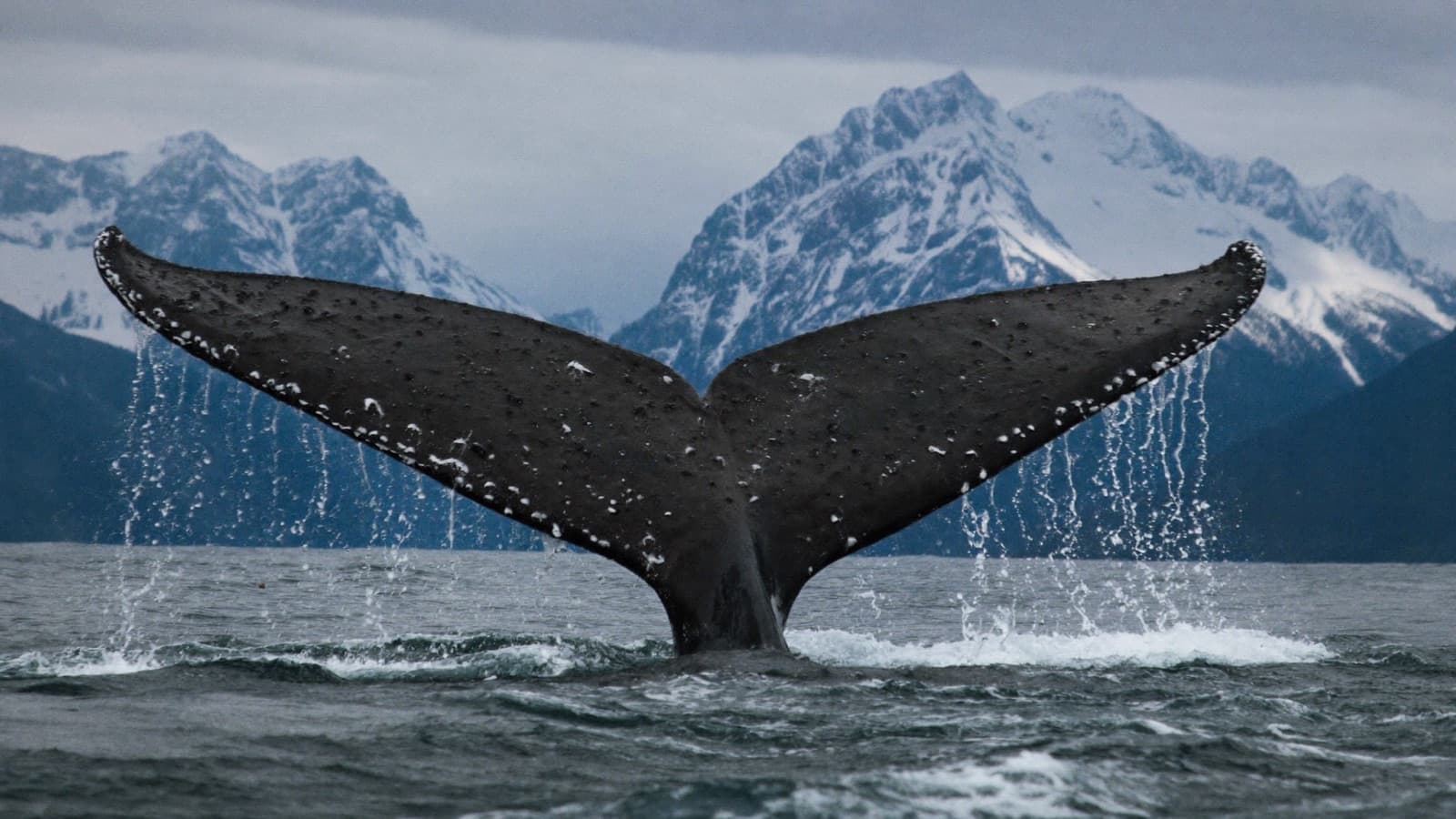
| Humpback whale | Very high on a boat trip | Icy Strait Point, Juneau |
| Harbour seal | Very high | On ice in Endicott Arm |
| Steller sea lion | High | Rocky haul outs on boat trips |
| Sea otter | High | Sitka, Prince William Sound |
| Kittiwake and gull | High | Glacier faces |
| Black bear | Moderate, July and August | Ketchikan bear viewing |
| Brown bear | Moderate on a guided tour | Chichagof Island from Icy Strait Point |
| Mountain goat | Moderate | Tracy Arm cliffs, Gloomy Knob in Glacier Bay |
| Tufted puffin | Moderate to high | Sitka outer coast, May to July |
| Orca | Low to moderate | Anywhere, not reliably |
| Dall's porpoise | Moderate | Prince William Sound, open channels |
| Sitka black tailed deer | Low to moderate | Forest edges near ports |
| Moose | Low | Land extensions rather than the coast |
| Wolf | Very low | Denali, not the coast |
Why bears depend on salmon
Bear sightings are almost entirely a function of food. For most of the year bears in Southeast Alaska are dispersed across enormous areas of forest, feeding on vegetation, berries and intertidal life, and finding one is genuinely difficult.
When salmon return to spawn, typically from mid July through August depending on the run and the stream, bears concentrate at predictable places. That is the window in which bear viewing works.
If a bear excursion is important to you, sail in late July or August and ask the operator directly whether fish are currently in the creek. A brochure photograph tells you nothing about this year's run.
Why a boat trip matters so much
From the ship you see wildlife at 300 to 1,000 metres, usually as a shape. From a small boat you see it at 50 to 200 metres, and crucially the boat can follow behaviour rather than passing it.
A whale from the deck is a blow and a back. A whale from a boat is a feeding sequence you can watch develop.
For most travellers, one good boat trip is worth more than any amount of deck time. See the whale watching guide.
Binoculars
The single most useful item you can bring, and the one most often left at home.
An 8x42 pair is the best all round choice: 8x is stable enough to hold on a moving deck, and 42mm objectives gather enough light for the overcast conditions that dominate the region. 10x42 works if your hands are steady. Anything above 10x is difficult to hold usefully on a ship.
Bring one pair each. Sharing means one of you is always looking at the wrong thing.
Where to look from the ship
- Shorelines during fjord transits. Bears and goats, best found by sweeping slowly with binoculars.
- Floating ice near glacier faces. Harbour seals, often dozens, easily mistaken for grey lumps.
- Kelp beds and sheltered bays. Sea otters, low in the water and easy to miss.
- Channel markers and rocky islets. Steller sea lions, loud and unmistakable.
- The wake and bow wave. Dall's porpoise sometimes ride it.
- Cliff ledges. Mountain goats appear as white dots. Gloomy Knob in Glacier Bay is the reliable spot.
On guarantees
Many operators advertise a wildlife sighting guarantee. It is a refund policy, not a biological promise: typically a partial refund or a free repeat trip if nothing is seen. Given that underlying sighting rates on a July whale trip exceed 95 percent, the guarantee costs the operator little.
That is not a criticism, but it should not be a deciding factor between operators. Boat size, departure point and trip duration matter far more.
Watching responsibly
- Marine mammal regulations require vessels to keep specified distances from whales. A good operator will explain this and follow it.
- Do not encourage a captain to approach closer.
- Never feed anything, including birds.
- On shore, particularly near salmon streams, keep well back from bears and follow guide instructions immediately.
- Keep noise down at glacier faces where seals are pupping. This is why ships slow in Endicott Arm.
Frequently asked questions
What wildlife will I definitely see on an Alaska cruise?
Will I see bears on an Alaska cruise?
Can I see wildlife from the cruise ship without booking an excursion?
What are the best binoculars for an Alaska cruise?
Related articles
Wildlife
Alaska Whale Watching Guide
Where and when to see whales on an Alaska cruise, which ports have the best odds, what bubble net feeding is, and how to choose a whale watching operator.
Updated
Wildlife
Choosing Binoculars for an Alaska Cruise
How to choose binoculars for an Alaska cruise, what 8x42 means, why bigger magnification is usually worse, and how much you need to spend.
Updated
Wildlife
Bear Viewing on an Alaska Cruise
How to see bears on an Alaska cruise, which ports offer viewing, why timing matters more than money, and what the realistic odds are.
Updated